
An answer is not enough
Understanding takes explaining, making an argument, and trying again.
RVD.AI · A NEW CLASSROOM FOR THINKING
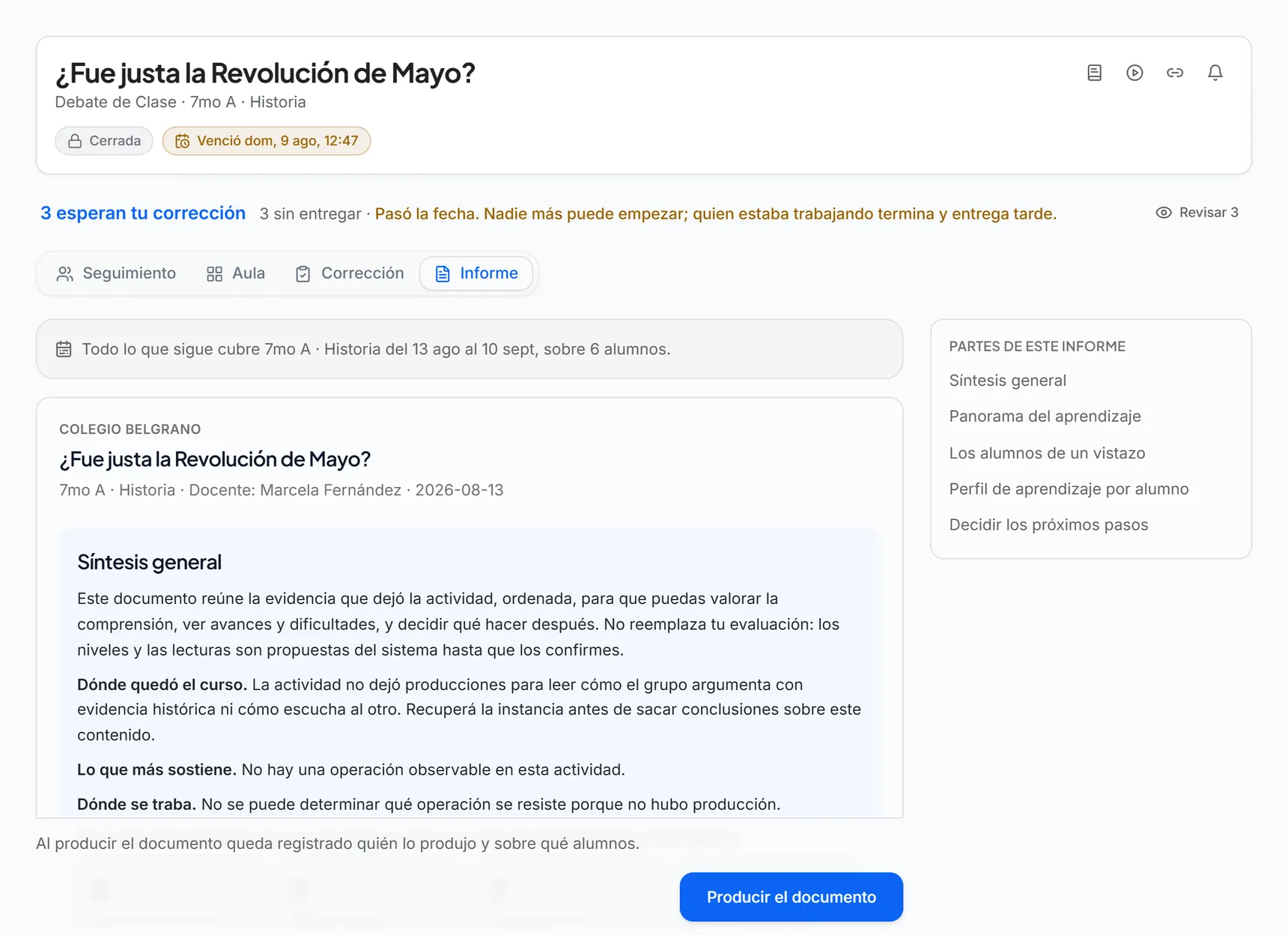
The teacher sets the purpose. Berni follows it with every student.
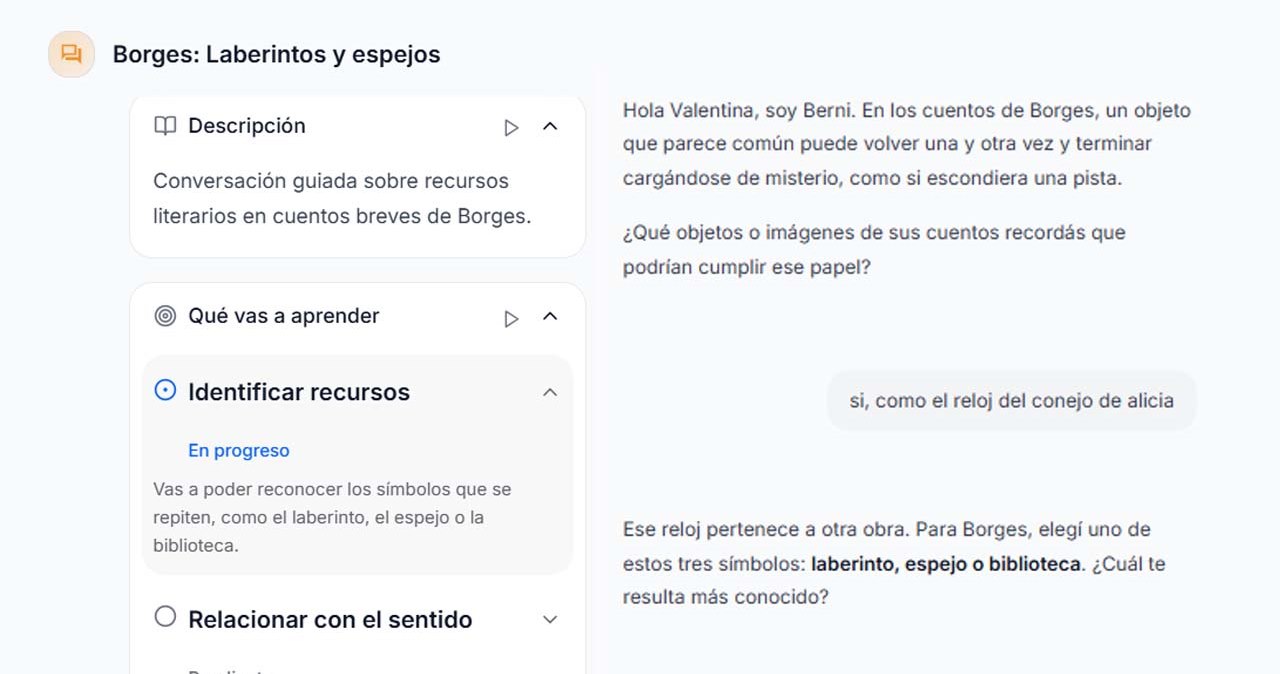
Each student connects what they study to their own life, analyzes it and argues it with Berni, the educational assistant, which works with the teacher's objectives and instructions.
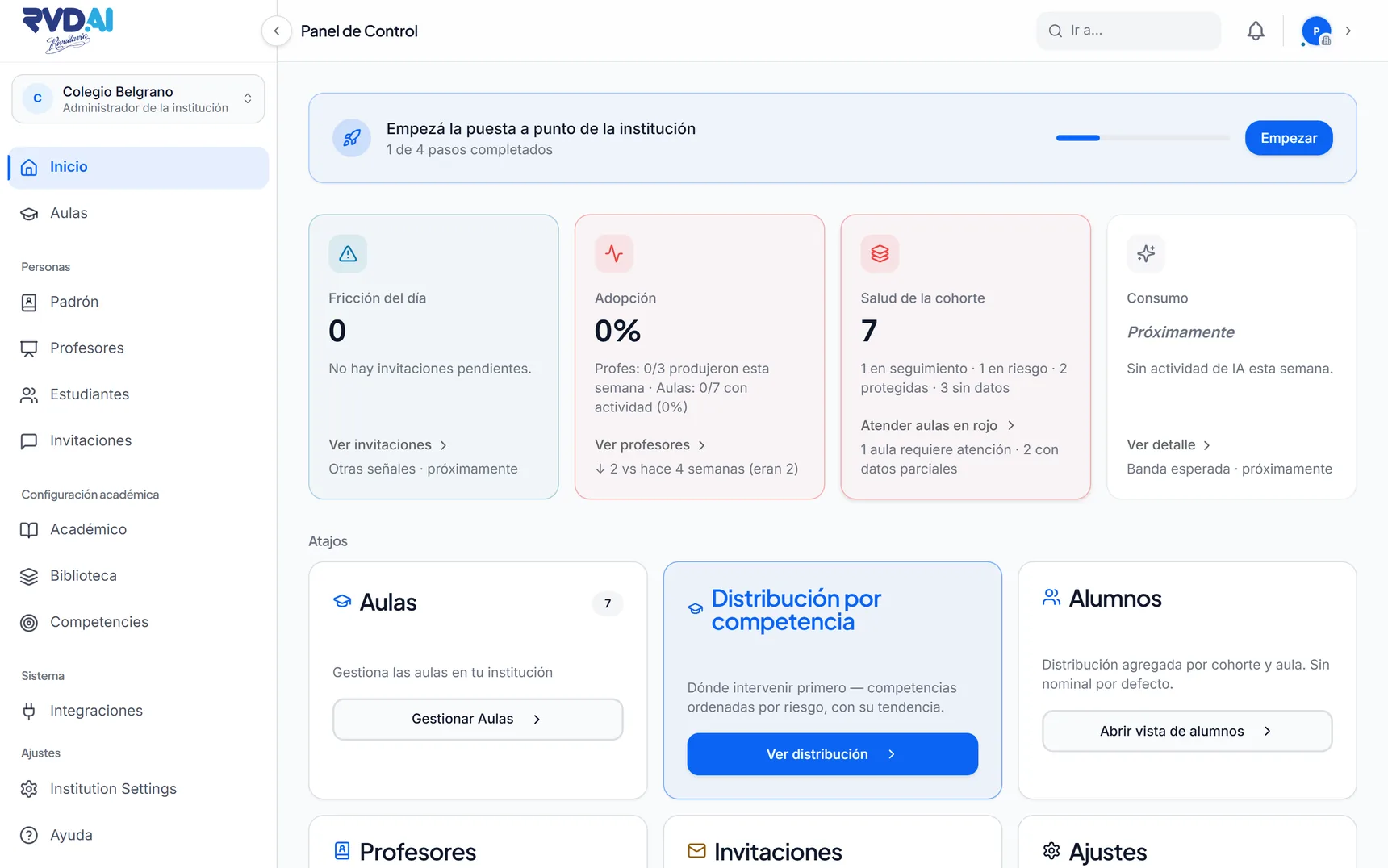
Set activities and objectives, follow the classroom, and decide where to step in.
THE CONTEXT
In a real classroom, those moments multiply. A teacher cannot be beside every student as they question, answer, or revise an idea. The data show the scale of the challenge.
COGNITIVE DEBT
It can appear when an answer arrives before the work of thinking. The outcome can be right; the process may not be there.
Understanding takes explaining, making an argument, and trying again.
It can answer for the student and leave the reasoning out.
Without seeing how a student reached an answer, the teacher has fewer signals to guide what comes next.
THE PROPOSAL
Every activity goes through four pillars. The teacher sets the first one, and it shapes the other three.
Set by the teacher
The teacher starts from their own content and decides which thinking skill to develop. The activity connects it to each student's life.
The teacher gives Berni the topic, the way to speak with the group, and each student's objectives.
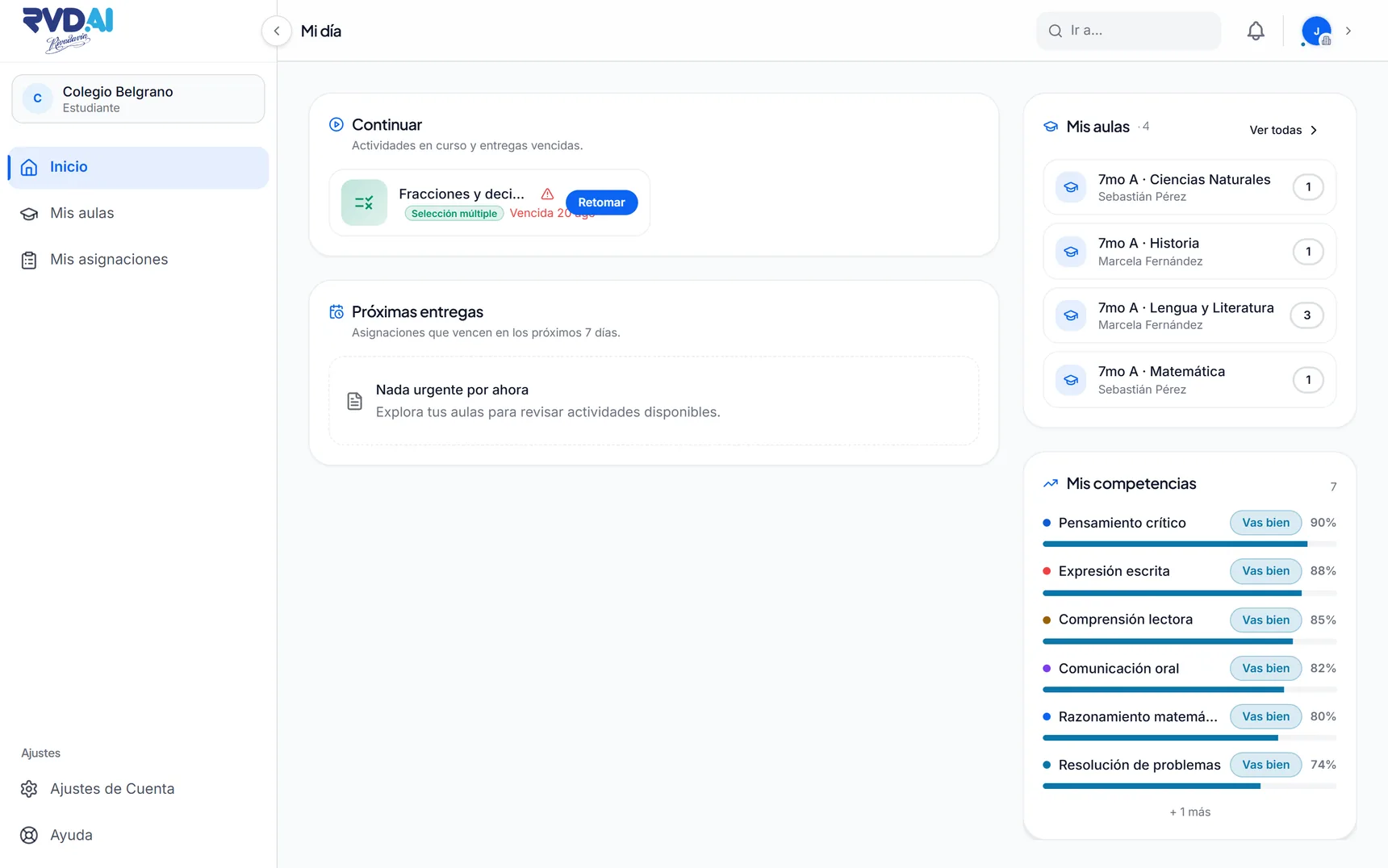
Each student works at their own pace. Berni adjusts the support and keeps the same expectations for everyone.
Questions, arguments, and changes of mind are recorded so the teacher can decide what comes next.
FOR THE INSTITUTION
The institution sets shared criteria and boundaries. Teachers bring them into their activities and decide how to support their students.
HOW YOU USE IT
Create an activity with AI from your objective and your materials, or build it by hand. Objectives and rubric included.
Assign it to your classroom with dates. If students work on it in class, project a code and they join without an account.
Follow each student's progress, grade starting from the AI's suggestion, and read the assignment report.
Berni is your co-teacher: it multiplies to sit beside every student and works with your objective, your materials, and your limits.
ON VIDEO
A REAL EXAMPLE
Three activities created in RVD.AI Classroom to work on the commutative and associative properties. Each one starts from an everyday situation: topping up a phone balance, timing a trip, or adding up game points.
MADE IN THE CLASSROOM
For three years we have worked side by side in real classrooms with leading schools, their teachers, and their students, backed by Ángel Estrada. Every decision in RVD.AI Classroom comes from that practice.
The method grew out of practice in real schools and closely follows the scientific evidence: Stanford, Harvard's Project Zero, and MIT's studies on cognitive debt.
Explore the EduMAIA method ↗RVD.AI by Ángel Estrada and the EduMAIA method were finalists in Talent Development Innovation.
The Foundation announced it had begun implementing RVD.AI in its classrooms with its school leadership and teaching teams.
With leading schools, their teachers, and their students.
What happens in class every day shapes how the tool works.
A pedagogical team decides how Berni works and how activities are built.
The company that develops RVD.AI, with more than 150 years of experience in education.
WHY BERNI IS DIFFERENT
RVD.AI Classroom connects the teacher's purpose with the activity, Berni's guidance, and follow-up on classroom work.
| Aspect | Berni in RVD.AI Classroom | General-purpose AI |
|---|---|---|
| Purpose and instructions | Berni follows the objectives and instructions the teacher sets for the activity, in every conversation. | It responds to whatever each user asks, and its behavior can change when the tool is updated. |
| Activity design | Create activities with AI or from scratch, and define objectives and a rubric. | The teacher adapts the chat response to the lesson's goal and format. |
| Student guidance | In Socratic debate, Berni guides with questions and does not give the answer. In other activities, guidance depends on the format. | It can answer directly when asked for a solution. |
| Teacher follow-up | Depending on the activity, review the conversation, progress by objective, and signals that help decide where to step in. | Follow-up on classroom work usually happens outside the chat. |
| Assessment | In compatible activities, review and correct the AI's rubric-based assessment suggestion. | A teacher's rubric is not always part of the workflow. |
ONE COMMUNITY, CLEAR PATHS
Teachers sign up directly. Schools request an implementation. The two paths stay separate.

Bring RVD.AI Classroom to your school with a shared purpose, support, and evidence for your community.
See this path →
Create activities, instruct Berni, and review signals that help you decide where to step in.
See this path →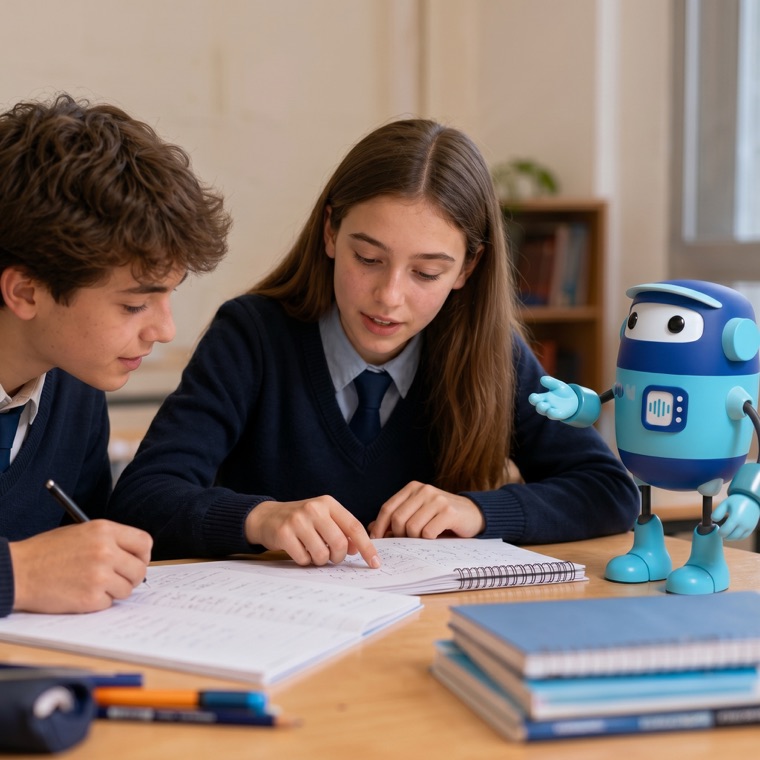
Get questions and hints in your activities, and study from your paper notes with the mobile app.
See this path →Read the attributed case study →With RVD.AI, we plan and monitor classes in less than half the time, and students participate more.
SCHOOLS
Schools and institutions listed by RVD.AI.









FREQUENTLY ASKED QUESTIONS
Short definitions for teachers, schools, families, and search engines.
RVD.AI Classroom is an Argentine education tool that connects students with real life so they can think. The teacher creates activities, runs them in class, and follows each student's work. Berni, its educational assistant, supports each student within the instructions the teacher sets.
Schools get access at no cost for the entire 2026 school year (March to December) and request it from this site. A teacher can also create an account and try RVD.AI Classroom in a personal workspace with usage limits.
Berni guides with questions and hints within the teacher's instructions. The student builds the answer, and the teacher sees how much help they needed to get there.
The AI suggests a level and a reason for each rubric criterion, and the teacher confirms or changes it: the teacher's grade always prevails. For written, handwritten, and spoken work, the student sees that suggestion when they turn it in, marked as pending teacher review.
For a live class, the code the teacher projects is enough: each student joins and picks their name. They can also sign in with the account their school gives them or with Google.
RVD.AI IN THE MEDIA
FREE THROUGHOUT 2026
Create your teacher account or request a demo for your school.